
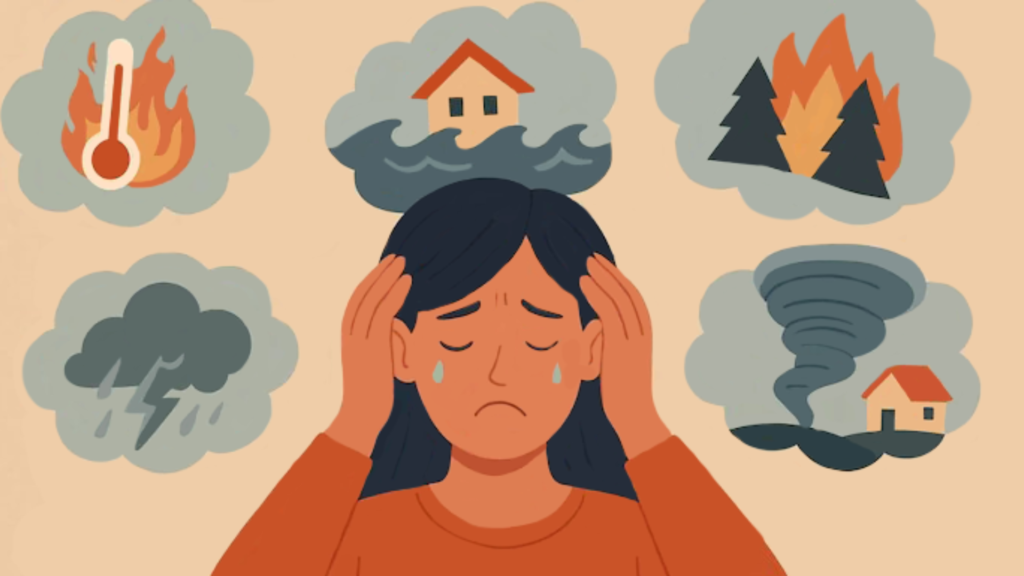
Climate change is no longer just an environmental or economic challenge—it is increasingly becoming a mental-health concern. Across the world, particularly in countries like India where climate impacts are severe, people are experiencing rising levels of anxiety, fear, and emotional fatigue linked to environmental uncertainty. Heatwaves, floods, air pollution, and erratic weather patterns are contributing to stress, irritability, sleep disturbances, and a sense of helplessness. This emotional strain, often described as eco-anxiety, reflects a persistent worry about the planet’s future and a fear of what rapid climate shifts may bring.
Eco-anxiety goes beyond momentary concern. It can manifest as guilt over lifestyle choices, sadness about environmental degradation, anger at inaction, and apprehension about the future. Young people appear particularly vulnerable, with many being overwhelmed by the constant influx of climate-related information. News of melting glaciers, rising temperatures, or extreme weather events can erode their sense of stability and create an impression that the world is becoming unpredictable. This emotional burden can become a daily experience, shaping their expectations for adulthood and long-term wellbeing.
The psychological effects of climate change are also intensified by direct exposure to disasters. Floods, droughts, and displacement often lead to grief, trauma, and stress after the loss of homes or livelihoods. For those working closely with nature—such as farmers or fishing communities—the emotional toll is compounded when climate unpredictability disrupts their identity and way of life.
Despite its growing prevalence, eco-anxiety is recognised by experts as a reasonable and valid response rather than a disorder. Helpful coping strategies include acknowledging emotional reactions, staying informed without becoming overwhelmed, engaging in climate action that fosters a sense of agency, and building supportive community connections. Professional help may also be necessary when distress begins to affect functioning.
As the climate crisis deepens, integrating mental-health awareness into environmental conversations becomes essential. Addressing eco-anxiety requires compassionate dialogue, community support, and systemic action that reduces climate risks while strengthening emotional resilience. By acknowledging this psychological burden, societies can build a healthier and more hopeful path forward.
SOURCES:
- https://timesofindia.indiatimes.com/home/environment/global-warming/from-eco-anxiety-to-emotional-fatigue-how-climate-change-is-affecting-mental-health/articleshow/121381188.cms
- https://mentalhealthcommission.ca/public-resources/research/understanding-and-coping-with-eco-anxiety/
- https://www.weforum.org/stories/2022/11/children-mental-health-eco-anxiety/
- https://www.dailypioneer.com/2024/columnists/the-hidden-toll-of-climate-change–india—s-struggle-with-eco-anxiety-and-mental-health.html