

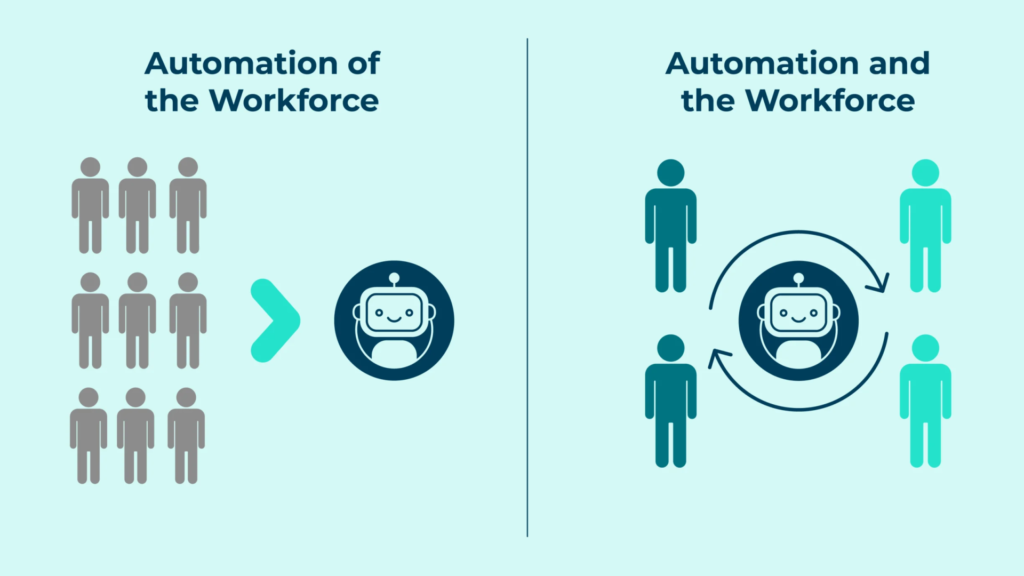
For much of modern history, productivity has been shaped by tools that extend human capability. From the steam engine to the spreadsheet, each wave of innovation has redefined how work is done and what workers can achieve. Today, automation is reshaping the workplace—quietly and at an unprecedented scale. Rather than replacing the workforce outright, it is transforming how people contribute, collaborate, and create value.
Automation now operates behind the scenes in offices, factories, hospitals, and logistics networks. Routine tasks that once consumed hours (such as data entry, scheduling, inventory tracking, and quality checks) can now be completed in seconds. Research from organizations such as McKinsey and the OECD shows that automating repetitive work frees employees to focus on problem-solving, creativity, and strategic thinking. Productivity is no longer measured only by output per hour but by the complexity of what humans can accomplish with technological support.
This shift is visible in knowledge-based industries. Artificial intelligence tools assist analysts in processing large datasets, help marketers understand customer behavior, and enable engineers to test designs virtually before physical production begins. Instead of replacing expertise, automation amplifies it. Workers can explore more ideas, test more scenarios, and make decisions faster than ever before.
Simultaneously, automation is reshaping the rhythm of work. Processes that once moved in linear steps now operate continuously. Supply chains adjust in real time, customer service systems respond instantly, and predictive maintenance prevents disruptions before they occur. The result is a workplace that anticipates challenges rather than simply responding to them.
Yet the most significant impact may be cultural. As routine tasks diminish, the value of unique human skills grows. Communication, adaptability, and emotional intelligence are becoming central to productivity because they complement what machines cannot replicate. According to the World Economic Forum, these “human skills” are the most in-demand capabilities for the future workforce.
Automation is not the end of human work; it is a redefinition of it. By removing repetitive burdens and expanding human potential, it is shaping a workplace where productivity is driven by collaboration between people and technology.
SOURCES:
- https://www.mckinsey.com/mgi/our-research/agents-robots-and-us-skill-partnerships-in-the-age-of-ai
- https://www.mckinsey.com/capabilities/tech-and-ai/our-insights/the-economic-potential-of-generative-ai-the-next-productivity-frontier
- https://www.oecd.org/en/topics/policy-issues/future-of-work.html
- https://www.weforum.org/publications/the-future-of-jobs-report-2023/