

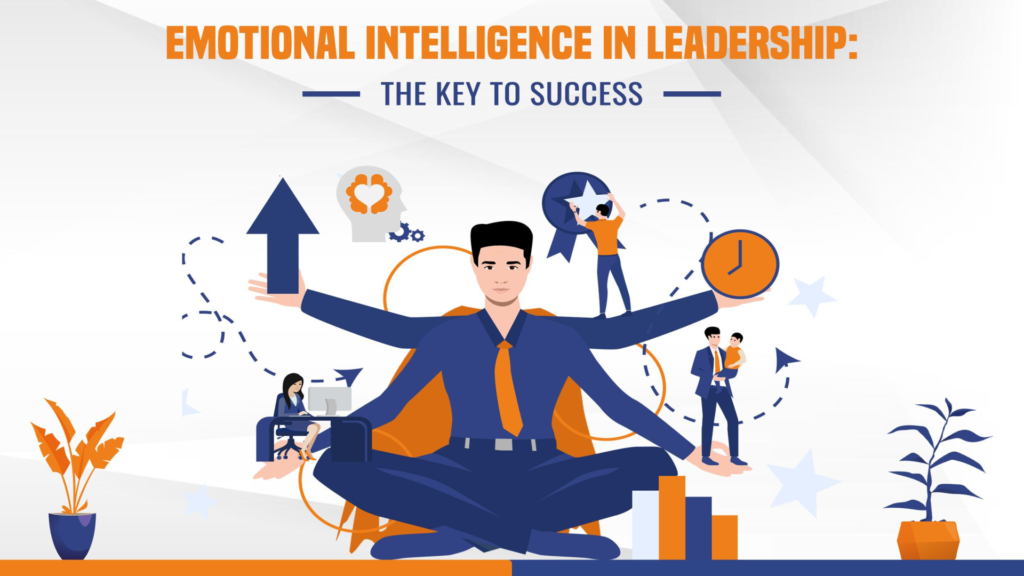
In the global workplace, management philosophies are evolving rapidly as organizations confront uncertainty, cultural diversity, and constant technological disruption. Traditional management styles built on hierarchy, authority, and rigid control are increasingly proving inadequate in this environment. In contrast, emotional intelligence (EI), defined as the ability to recognize, understand, and manage emotions in oneself and others, has emerged as a decisive leadership capability worldwide.
Across regions and industries, emotionally intelligent leaders are better equipped to navigate complexity. Harvard Business Review highlights that leaders with strong emotional intelligence foster trust, collaboration, and adaptability. Traditional managers often prioritize rules and output metrics, which can discourage open communication and innovation. Emotionally intelligent leaders, however, focus on empathy, self-awareness, and relationship-building, allowing teams to respond more effectively to change and pressure.
From a global perspective, emotional intelligence is especially critical in managing diverse and cross-cultural teams. Leaders who understand emotional cues and cultural sensitivities are more successful in resolving conflict, motivating employees, and aligning teams toward shared goals. The World Economic Forum consistently ranks emotional intelligence among the most important future skills, noting that human-centered leadership will remain essential even as automation and artificial intelligence expand.
Unlike command-and-control approaches, emotionally intelligent leadership emphasizes psychological safety and employee well-being. This results in higher engagement, improved decision-making, and stronger organizational resilience. Employees who feel understood and valued are more likely to contribute creatively and remain committed, giving emotionally intelligent organizations a long-term competitive edge in global markets.
The Indian context reinforces this leadership shift. As Indian organizations expand globally and manage diverse workforces, emotional intelligence enables leaders to balance performance expectations with empathy and cultural sensitivity. In sectors such as information technology, startups, manufacturing, and public administration, EI-driven leadership is increasingly associated with employee well-being, ethical governance, and sustainable growth. It also aligns with India’s evolving corporate culture emphasizing collaboration and purpose-driven work.
Thus, emotional intelligence outperforms traditional management styles because it recognizes that people, not processes alone, drive sustainable success. In a globally connected economy, leadership effectiveness is increasingly defined by emotional insight rather than positional authority.
SOURCES:
- https://professional.dce.harvard.edu/blog/why-emotional-intelligence-is-critical-for-successfully-managing-up/
- https://www.forbes.com/councils/forbesbusinesscouncil/2023/07/25/why-emotional-intelligence-is-crucial-for-effective-leadership/
- https://timesofindia.indiatimes.com/education/upskill/emotional-intelligence-why-is-it-a-crucial-component-of-leadership-courses/articleshow/101110110.cms
- https://www.weforum.org/publications/the-future-of-jobs-report-2025/in-full/3-skills-outlook/