

Author name: AG Group

Sector Specific Report – (Water Management and Sanitation) April 2026

SECTOR REPORTS Sector Specific Report – (Water Management and Sanitation) April 2026 The AMRUT Mitra Mahotsav, organized by the Ministry of Housing and Urban Affairs, highlights the growing role of women in urban water governance under the Atal Mission for Rejuvenation and Urban Transformation (AMRUT) 2.0. The initiative celebrates women Self-Help Group (SHG) members, known […]

Sector Specific Report – (Water Management and Sanitation) April 2026 Read More »

CARBON FOOTPRINTS AND FUTURE GENERATIONS: WHY ACTION CAN’T WAIT?

A carbon footprint is often spoken about as a number – measured, calculated, and reported. Yet, in reality, it is something far more personal. It is the invisible trace of how we live today, quietly shaping the conditions of tomorrow. Unlike many consequences that fade with time, carbon lingers, building an atmospheric legacy that future

CARBON FOOTPRINTS AND FUTURE GENERATIONS: WHY ACTION CAN’T WAIT? Read More »

THE NEXT STARTUP BOOM: INDUSTRIES ABOUT TO EXPLODE

Startup ecosystems have always moved in waves, but the next surge is not waiting on the horizon—it is already gathering speed. What distinguishes this moment is the convergence of urgency, capital, and technological maturity. Across sectors, signals of breakout growth are no longer subtle; they are accelerating, pointing to industries on the brink of exponential

THE NEXT STARTUP BOOM: INDUSTRIES ABOUT TO EXPLODE Read More »

BRAND STORYTELLING: SELL EMOTIONS, NOT JUST PRODUCTS

In crowded marketplaces where features and prices are easily replicated, what truly differentiates a brand is not what it sells, but what it makes people feel. Brand storytelling has emerged as a powerful tool that transforms transactions into relationships, shifting the focus from products to emotions, values, and shared meaning. At its core, storytelling humanizes

BRAND STORYTELLING: SELL EMOTIONS, NOT JUST PRODUCTS Read More »

RECYCLING IS NOT ENOUGH—NOW WHAT?

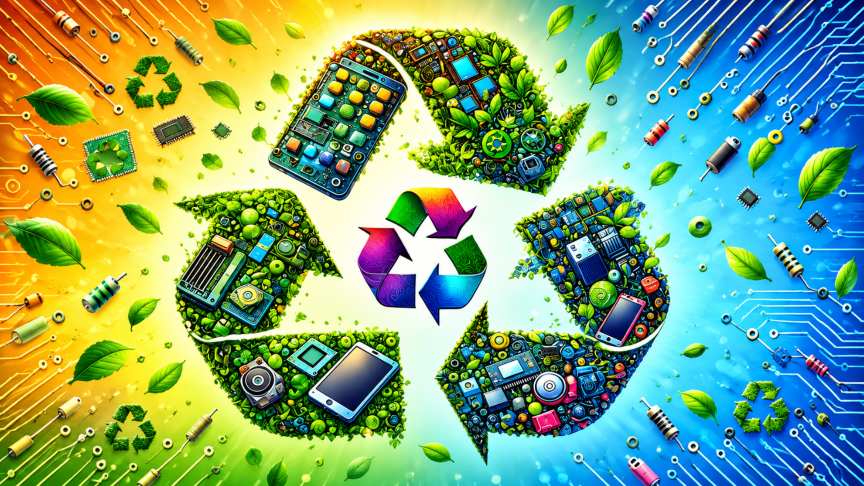
For decades, recycling has symbolized responsible consumption—a tangible act that reassures individuals they are contributing to environmental protection. Blue bins, sorting labels, and circular arrows have become embedded in everyday life. Yet, despite global efforts, the scale of waste generation continues to outpace recycling capacity. According to the Organisation for Economic Co-operation and Development (OECD),

RECYCLING IS NOT ENOUGH—NOW WHAT? Read More »

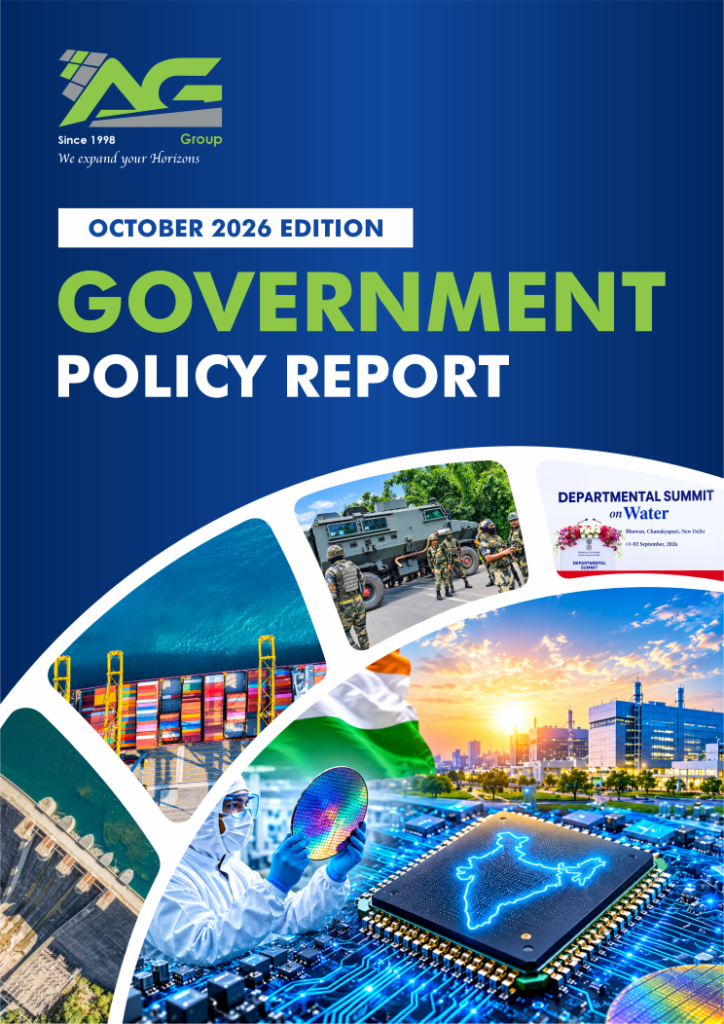
Government Policy Report – April 2026

GOVERNMENT POLICIES Government Policy Report l April 2026 The Union Budget 2026–27 reinforces the strategic importance of Special Economic Zones (SEZs) in driving India’s export-led growth and investment expansion. With over 368 notified SEZs across the country, these zones have played a crucial role in boosting exports, attracting foreign direct investment, and generating large-scale employment

Government Policy Report – April 2026 Read More »

Analysis Report On Union Budget 2026-27 – March 2026

ANALYSIS REPORTS Analysis Report On Union Budget 2026-27 – March 2026 The Union Budget 2026–27, presented by the Government of India in February 2026, outlines the fiscal priorities and policy direction for the upcoming financial year. As a central instrument of economic governance, it integrates revenue, expenditure, and reform measures to guide resource allocation and

Analysis Report On Union Budget 2026-27 – March 2026 Read More »

GREEN SUPPLY CHAINS: THE FUTURE OF BUSINESS OPERATIONS

Supply chains have long been designed for efficiency, speed, and cost reduction. From sourcing raw materials to delivering finished products, the focus has traditionally been on optimizing performance at every stage. Today, that approach is evolving. Businesses are recognizing that efficiency alone is no longer enough; sustainability is becoming a critical priority. A green supply

GREEN SUPPLY CHAINS: THE FUTURE OF BUSINESS OPERATIONS Read More »

FROM HUMAN EFFORT TO SMART SYSTEMS: AUTOMATION ERA EXPLAINED

Work has long been defined by human effort, time, skill, and repetition shaping how tasks are completed. From manual labor to routine office processes, progress has depended on how efficiently people could perform their work. Today, that foundation is shifting. Effort is no longer the only driver of productivity; systems are increasingly taking on roles

FROM HUMAN EFFORT TO SMART SYSTEMS: AUTOMATION ERA EXPLAINED Read More »