

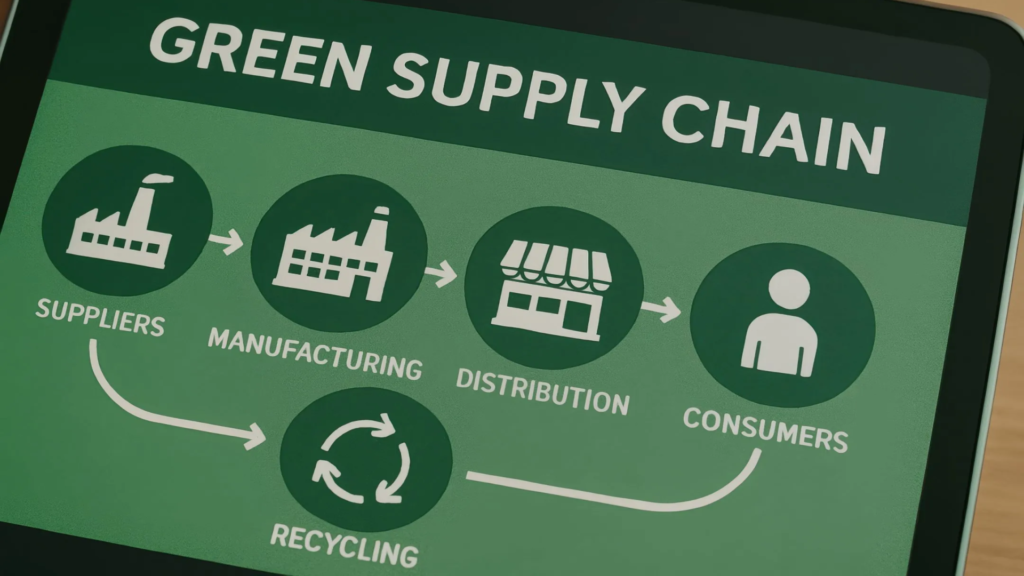
Supply chains have long been designed for efficiency, speed, and cost reduction. From sourcing raw materials to delivering finished products, the focus has traditionally been on optimizing performance at every stage. Today, that approach is evolving. Businesses are recognizing that efficiency alone is no longer enough; sustainability is becoming a critical priority.
A green supply chain extends beyond efficiency to consider environmental impact at every step. It involves responsible sourcing, reduced energy consumption, and minimizing waste across production and distribution. Rather than treating sustainability as an obligation, companies are integrating it into operations, reshaping how goods move from origin to end user.
This transformation is driven by necessity and opportunity. Increasing regulatory pressure, resource constraints, and changing consumer expectations are pushing businesses to rethink traditional models. At the same time, sustainable practices often lead to cost savings, improved resilience, and stronger brand reputation. What once seemed like a constraint is now a competitive advantage.
Technology plays a role in enabling greener supply chains. Digital tracking systems and smart logistics allow companies to monitor resource use, optimize routes, and reduce emissions. Greater visibility across the supply chain helps identify inefficiencies. In this way, sustainability becomes measurable and actionable.
Globally, organizations are adopting greener practices to align operations with environmental goals. From reducing packaging waste to transitioning toward renewable energy sources, the shift is visible across industries. Supply chains are no longer viewed solely as cost centers, but as systems that influence both business performance and environmental outcomes.
In India, this transition is gaining momentum as businesses respond to regulatory frameworks and growing awareness of environmental impact. Companies are exploring sustainable sourcing, energy efficient logistics, and circular economy models. Although challenges remain, the movement toward greener supply chains continues to expand.
Thus, the future of business operations lies in balancing efficiency with responsibility. Green supply chains represent more than a trend; they reflect a structural shift in how businesses operate. By embedding sustainability into every stage, organizations can create systems that are efficient, resilient, responsible, and aligned with a more sustainable future.
SOURCES: