

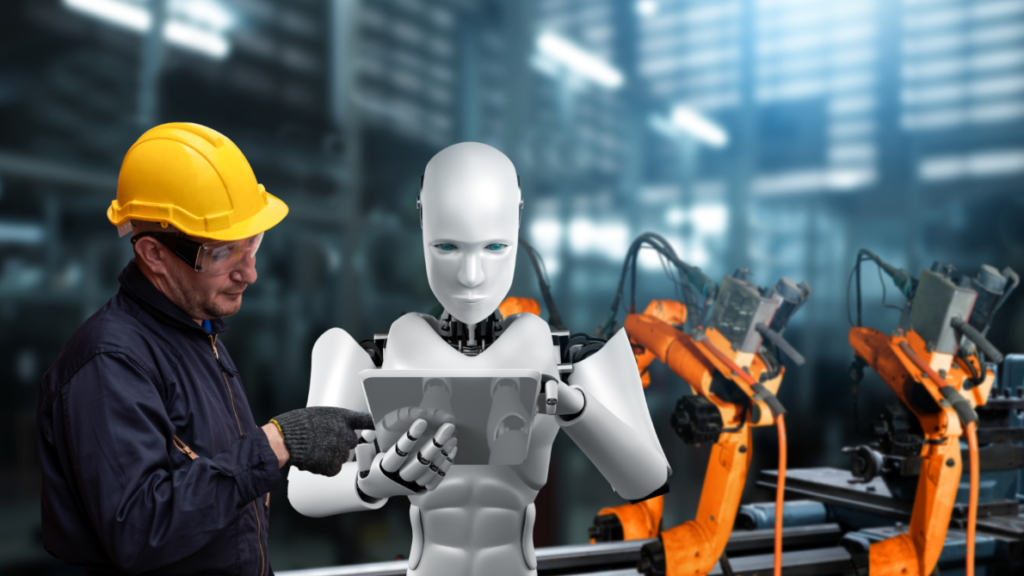
Work has long been defined by human effort, time, skill, and repetition shaping how tasks are completed. From manual labor to routine office processes, progress has depended on how efficiently people could perform their work. Today, that foundation is shifting. Effort is no longer the only driver of productivity; systems are increasingly taking on roles once carried out by individuals.
The automation era is not marked by the absence of human involvement, but by a redefinition of it. Smart systems now handle repetitive and time-consuming tasks with speed and consistency. Whether in manufacturing, services, or digital operations, automation reduces errors, improves efficiency, and allows processes to run continuously. These systems are designed to execute tasks and adapt based on data.
At the center of this transformation is the integration of technology and decision-making. Algorithms, machine learning, and connected platforms enable systems to analyze patterns, predict outcomes, and optimize performance. What once required constant supervision can now be managed through intelligent workflows. This shift does not eliminate human input, but elevates it toward oversight, strategy, and problem solving.
Globally, industries are adopting automation to remain competitive in an increasingly fast-paced environment. Businesses are rethinking operations, moving from labor-intensive models to system-driven processes. The result is greater scalability and responsiveness, where organizations can handle complexity with fewer constraints. This evolution reflects a broader transition toward efficiency across sectors.
In India, the automation shift is gradually reshaping both traditional and emerging industries. From manufacturing units adopting smart machinery to service sectors integrating digital platforms, the move toward automation is becoming more visible. While concerns around employment and skill transitions remain, there is also a growing emphasis on reskilling and adapting to new roles within this changing landscape.
Thus, the automation era is not about replacing human effort, but redefining its value. As smart systems take over routine functions, human contribution becomes more focused on innovation, judgment, and adaptability. The future of work lies not in choosing between people and machines, but in understanding how both can work together to create more efficient and intelligent systems.
SOURCES: