

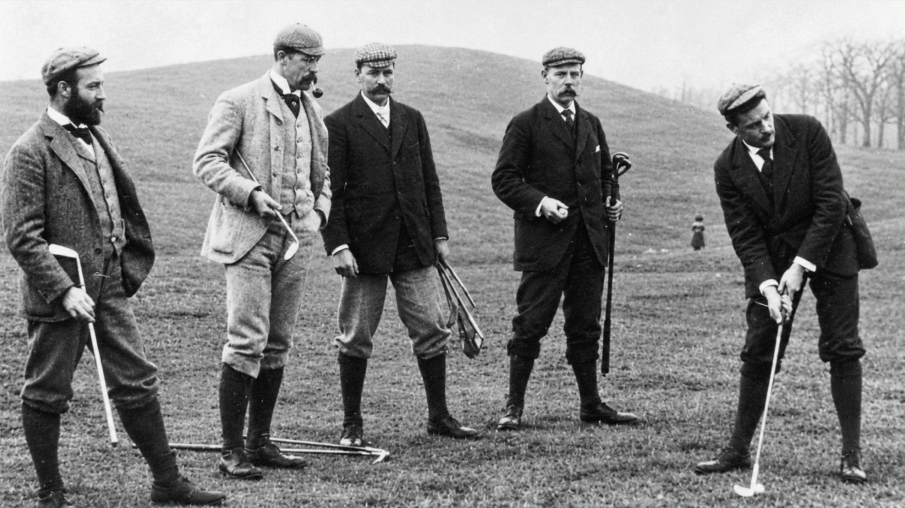
Golf’s familiar rules may seem timeless, but many began as practical solutions to disagreements and changing playing conditions. Behind playing the ball as it lies, completing 18 holes and carrying no more than 14 clubs are stories that reveal how the sport developed. These regulations emerged from golfers’ efforts to make competition fair, consistent and enjoyable.
The earliest documented rules date back to 1744, when 13 Articles and Laws were drawn up for a tournament in Scotland. Initially intended for one competition, they introduced principles that continue to shape the game, including restrictions on moving obstacles and playing an opponent’s ball. As golf spread, different clubs developed regulations suited to local playing conditions, gradually contributing to a more consistent framework.
Playing the ball as it lies is among golf’s best-known traditions. Recorded in 1775, the principle reflected the belief that players should accept the course’s natural challenges rather than change conditions to gain an advantage. The familiar 18-hole format also has a distinct history. Golf was not always played over 18 holes; the format became established in 1842 and eventually gained wider acceptance.
The 14-club limit has another interesting origin. Golfers once carried far more equipment, sometimes using 30 or more specialized clubs during a round. Concerns that extensive equipment gave players an unfair advantage led to the introduction of a 14-club restriction in 1938. It became widely recognized the following year and remains central to competitive play.
Golf has also abandoned rules that generated controversy. The stymie, once used in match play, prevented a player from lifting an opponent’s ball when it obstructed the line to the hole. Players therefore had to find creative ways around the obstruction. After years of debate, the rule was modified in 1938 and eliminated in 1952.
These stories show that golf’s rules have evolved alongside the sport. Traditions that now seem permanent often began as responses to practical challenges or disputes. Understanding their origins adds another dimension to the game, revealing how its history continues to shape the experience of every single round.
SOURCES: