

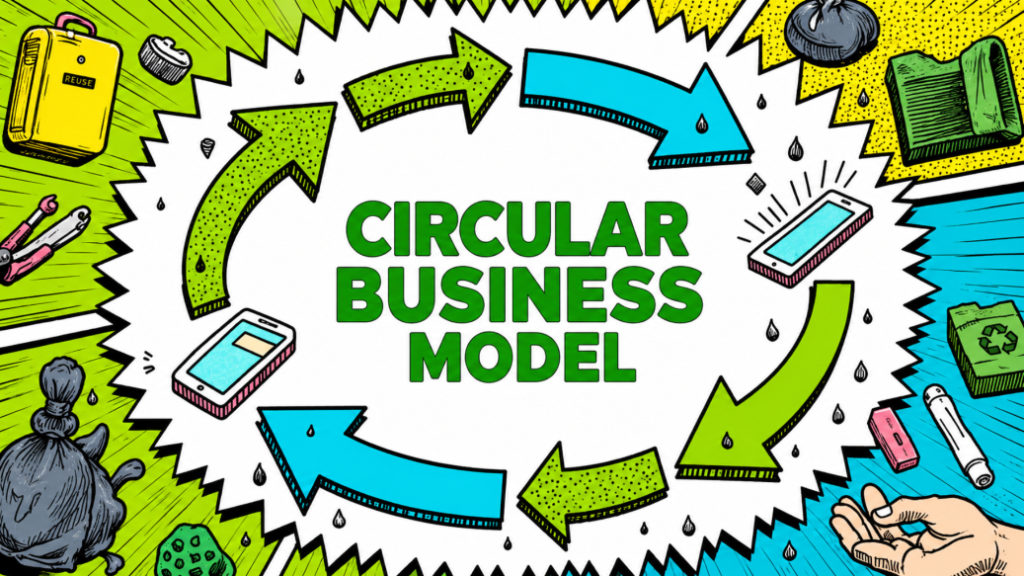
The old idea of “make, use and replace” is starting to look less practical. Businesses have relied on this model for decades, helping industries scale and products reach more people. But it has also created a growing dependence on raw materials and a steady stream of waste. With resources under pressure and supply chains facing new challenges, companies are finding value in doing more with what they already have. That shift is putting circular business models in the spotlight.
So, what does a circular business model actually look like? Instead of following the familiar take-make-dispose system, it tries to keep products, parts and materials useful for longer. A company might repair a product rather than replace it, refurbish returned goods and sell them again, collect packaging for another use, or recover materials from old products and put them back into production. The goal is not complicated: get more use out of what already exists before reaching for something new.
Technology is making some of these ideas easier to put into practice. Digital product tracking can help companies keep track of materials and products after they leave the factory, while predictive maintenance can identify problems before equipment breaks down. Better sorting and material recovery systems are also making it easier to recover useful materials that would otherwise be lost.
The market is changing at the same time. People want to know more about where products come from and what happens to them after use. Investors are paying closer attention to how companies manage resources, while governments are bringing in stricter rules around waste and emissions.
Businesses have their own reasons to rethink the old model too. A sudden rise in raw material prices or a disruption in supply can quickly turn into a cost problem. Reusing materials, repairing products and recovering components can help reduce some of that dependence. In that sense, circularity is beginning to make sense not only for the environment, but for the balance sheet as well.
India is also taking steps to make better use of the resources already in the economy. Government policies around Extended Producer Responsibility (EPR) are placing greater responsibility on producers to manage products and materials after they are used. EPR frameworks now cover areas such as plastic packaging, e-waste, batteries, waste tyres and used oil. Alongside these regulations, Mission LiFE promotes more mindful consumption, including practices such as reusing products, reducing waste and choosing recycled materials. Together with wider government efforts on resource efficiency and circular economy, these measures are giving businesses more reason to look at what happens to products and materials after their first use.
That may be one of the biggest reasons circular business models are gaining ground. The conversation is slowly moving away from “How do we dispose of this?” to a much more useful question: “What can we still do with it?”
SOURCES: