

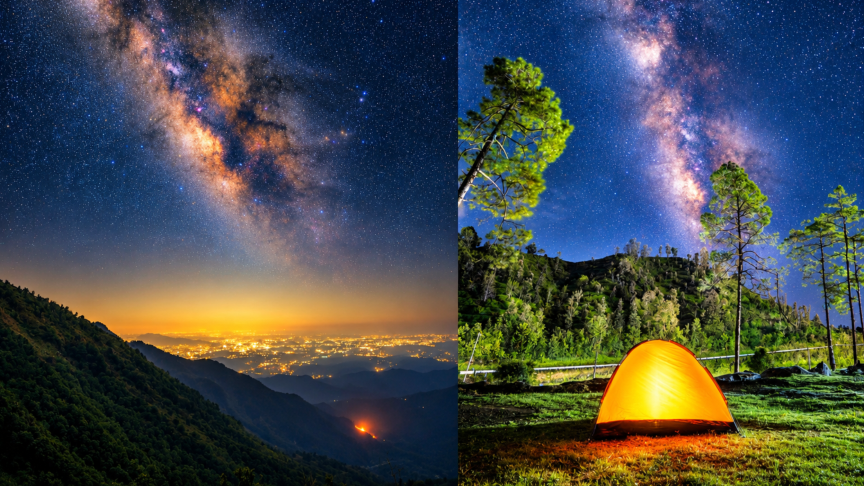
The night has always been more than the absence of daylight. It is a rhythm that tells people when to rest and wildlife when to feed, migrate, reproduce, and move. Yet as cities have grown brighter, darkness has become something to be pushed back. Streets, buildings, advertisements, and public spaces now remain illuminated long after activity has ended, making artificial light an environmental concern.
Artificial light at night is increasingly reshaping the natural environment. Light escaping upward creates skyglow, brightening areas far beyond the places that require illumination. What appears to be a sign of modern infrastructure can disrupt natural cycles. Research has linked night-time lighting with changes in animal behaviour, physiology, and ecological interactions.
For nocturnal wildlife, the consequences matter. Insects may be drawn towards artificial lights rather than their habitats, while birds can experience disruptions to movement and migration. Other species may alter feeding and reproductive behaviour when the distinction between day and night becomes blurred. The concern, therefore, is not only that the sky looks brighter; it is that artificial light can interfere with biological processes shaped by darkness.
India offers an example of how protecting darkness can coexist with development. The Hanle initiative in Ladakh was developed to establish a Dark Sky Reserve, combining protection of the night sky with astronomy and opportunities for astro-tourism. It shows how mindful lighting can preserve natural darkness while supporting local economic opportunities.
The challenge is not to make cities dark, but to make lighting more thoughtful. Shielded fixtures, appropriate brightness, warmer light, motion sensors, and timed illumination can reduce unnecessary exposure while maintaining visibility. Better lighting can serve both people and nature while reducing wasted energy and ecological disruption.
The sustainable city of the future may not be the brightest one; it may be the one that understands where light belongs. Safeguarding dark skies does not oppose progress; it reminds us that sustainability also requires knowing when illumination is unnecessary. As cities illuminate the night, preserving darkness could help keep nature’s rhythms alive.
SOURCES:
- https://education.nationalgeographic.org/resource/light-pollution/
- https://darksky.org/resources/what-is-light-pollution/effects/wildlife-ecosystems/
- https://www.weforum.org/stories/urban-transformation/light-pollution-health-climate/
- https://www.pib.gov.in/Pressreleaseshare.aspx?PRID=1856505&lang=2®=48