

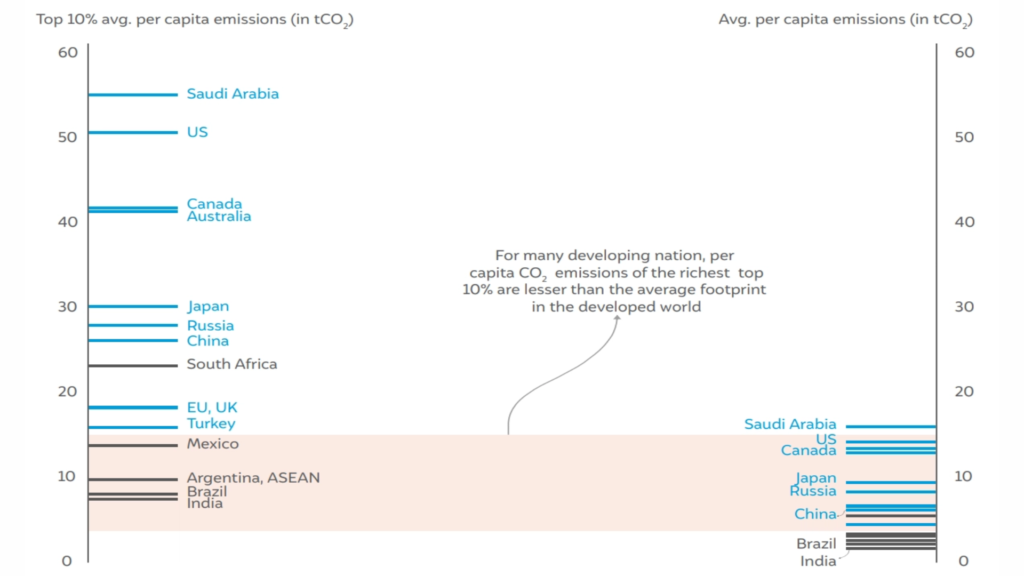
Climate change is often spoken about as a shared global challenge, but the reality is far less equal. The countries that contributed the least to global emissions are increasingly the ones facing the harshest consequences. While wealthier nations built industrial growth through decades of fossil fuel consumption, many developing economies now find themselves confronting rising seas, failing crops, extreme heat, and climate disasters with far fewer resources to respond. This widening gap defines what is recognized as climate inequality.
For vulnerable nations, climate change is not only an environmental issue; it is a question of survival, stability, and development. Many regions across Africa, South Asia, and small island states are facing intensified floods, extended droughts, and rising food insecurity despite contributing only minimally to historical carbon emissions. Reports from the Intergovernmental Panel on Climate Change and the United Nations Environment Programme continue to show that poorer nations often lack the financial systems, infrastructure, and technological support needed to adapt effectively. Recovery therefore becomes slower, more expensive, and deeply unequal.
This inequality extends beyond climate itself. Extreme weather disrupts schools, healthcare services, transportation systems, and local economies, pushing vulnerable populations further into uncertainty. Farmers lose seasonal predictability, coastal communities face displacement, and limited public resources are repeatedly redirected toward disaster recovery instead of long-term growth. Meanwhile, wealthier nations are often better positioned to protect themselves through stronger institutions, advanced technology, and climate adaptation investments.
In India, the effects of climate inequality are becoming increasingly visible through recurring heatwaves, unpredictable monsoons, and stress on agricultural livelihoods. Rural communities and low-income populations continue to face the greatest exposure to climate risks despite contributing minimally to global emissions. The challenge therefore goes beyond environmental protection and becomes closely tied to economic resilience and social equity.
Climate inequality reveals that climate change is not experienced equally, even if it is shared globally. Addressing it requires more than emission reduction targets alone. It demands climate finance, international cooperation, and stronger support for nations carrying the heaviest burden of a crisis they did little to create.
SOURCES: