

Solar panels are now common across rooftops and open fields. As the demand for clean energy grows, however, finding suitable land for large-scale installations is becoming challenging. Agricultural needs, urban expansion, and environmental considerations leave limited room. What if the next opportunity for solar energy was not on land, but on water?
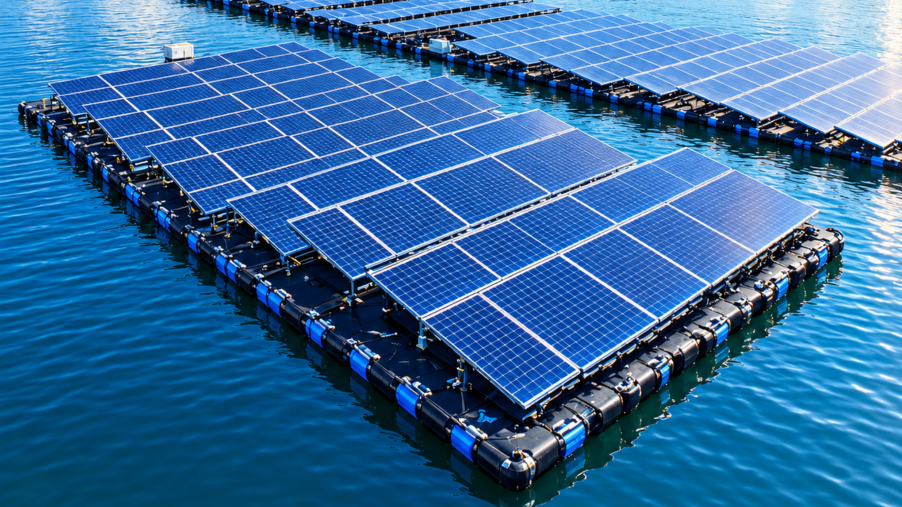
Floating solar farms are bringing this possibility closer to reality. Installed on buoyant platforms across reservoirs, lakes, and other suitable water bodies, these systems generate electricity without occupying valuable land. They make productive use of otherwise untapped surfaces. For densely populated regions, this approach offers an additional avenue for expanding solar capacity without competing directly with agricultural or urban land requirements.
Their potential goes beyond providing another place for panels. Water beneath the installations can help keep panels cooler, potentially improving their electricity generation efficiency. The panels can also provide shade that reduces water evaporation, an advantage in regions where water conservation is increasingly important. When installed on hydropower reservoirs, floating solar systems can further complement electricity generation by combining solar production with established hydropower infrastructure.
Yet, placing solar panels on water introduces considerations unlike conventional installations. Floating structures must withstand changing weather conditions, while anchoring systems, electrical connections, and maintenance require specialised attention. Their presence can also influence aquatic ecosystems, water quality, and other activities dependent on these water bodies. Careful site selection and environmental assessment are therefore essential to ensure that energy generation does not come at the expense of ecological balance.
Floating solar farms are not intended to replace conventional solar installations. They broaden renewable energy options by using available resources more effectively. As technology advances and installation costs become more competitive, suitable water bodies could become increasingly valuable contributors to clean electricity generation.
The future of solar energy may not be limited to the spaces beneath our feet. By bringing energy production onto water, floating solar farms offer a different way of thinking about renewable resources—one that connects energy expansion with more thoughtful use of land and water.
SOURCES: