

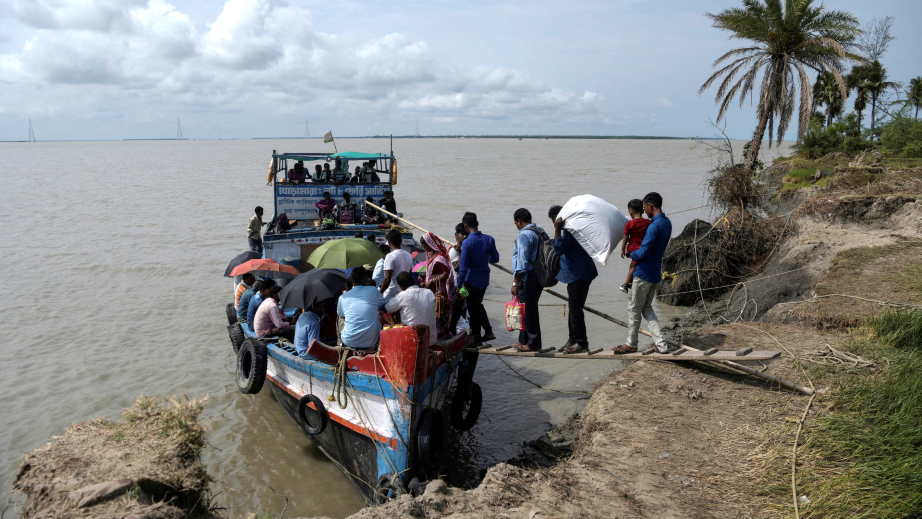
Home represents far more than a location on a map. It is where people build livelihoods, raise families, know their neighbours, and develop a sense of belonging. But climate change is making that permanence less certain. When floods damage homes, droughts weaken livelihoods, or rising seas threaten communities, leaving can become less a choice and more a necessity. What begins as environmental disruption can become a question of where people can continue to build their lives.
Climate migration is therefore not simply about moving from one place to another. For some, movement can create opportunities; for others, displacement happens when staying is no longer realistic. The World Bank estimates that climate change could drive up to 216 million people to move within their own countries by 2050 across six regions. Such movement may unfold gradually, as changing weather makes work less reliable, food more expensive, or everyday life harder to maintain.
India offers an important perspective on this changing relationship between climate and mobility. From agricultural communities facing changing rainfall to cities receiving people affected by floods, movement can bring both opportunity and uncertainty. Access to housing, basic services, employment, and social protection can determine whether relocation becomes a fresh beginning or another source of vulnerability.
This is where climate displacement becomes a sustainability challenge. Places receiving new communities must create space for them while managing pressure on water, housing, transport, energy, and other resources. Communities facing climate risks also need support to adapt rather than being left behind. The challenge is not only helping people move, but ensuring that both the places they leave and those they enter can support secure and dignified lives.
A sustainable response begins by giving people more choices before displacement becomes unavoidable. Resilient infrastructure, stronger livelihoods, thoughtful planning, and adaptation can help communities remain liveable as climate pressures grow. Ultimately, climate migration reminds us that sustainability is also about belonging. A sustainable future is one where people can build secure lives—whether they remain where they began or find a new place to call home.
SOURCES:
- https://www.worldbank.org/en/news/feature/2021/09/13/millions-on-the-move-in-their-own-countries-the-human-face-of-climate-change
- https://worldmigrationreport.iom.int/what-we-do/world-migration-report-2026/chapter-6/climate-migration-and-displacement-taking-action
- https://ec.europa.eu/echo/files/policies/sectoral/swd_2022_displacement_and_migrationrelated_to_disasters_climate_change_and_environmental_degradation.pdf
- https://www.weforum.org/stories/climate-action/4-ways-to-prevent-and-manage-climate-migration/