

Agriculture has always been a conversation between people and the land. Farmers have watched the skies, read their soils, saved water, changed crops, and adapted their practices to each season. That relationship has carried farming through generations. Today, however, conditions are becoming less predictable. Rising temperatures, erratic rainfall, water stress, and extreme weather are making familiar patterns harder to rely on. Agriculture must therefore learn not only to produce but also to adapt.
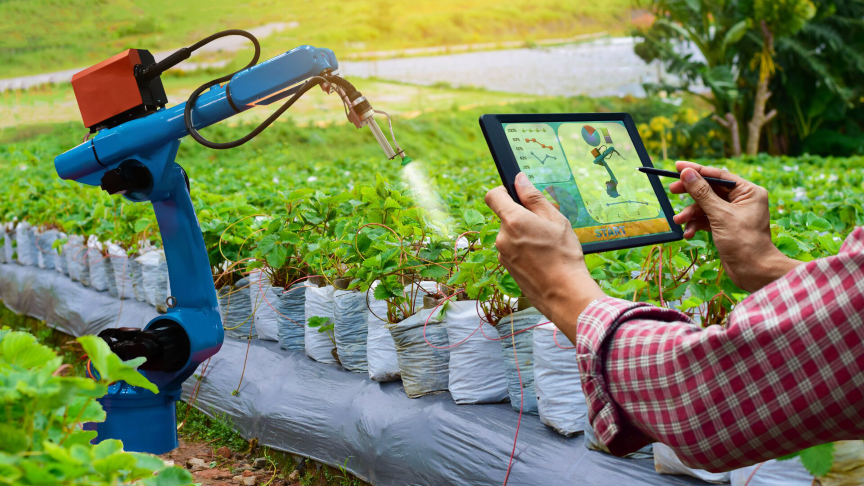
Technology is changing how that adaptation begins. Satellites can reveal crop and water stress, sensors can show changing soil conditions, drones can monitor fields, and artificial intelligence can turn vast amounts of information into useful insights. What once depended largely on observation can increasingly be supported by data, allowing farmers to understand their fields more precisely and respond with greater confidence.
But new technology matters only when it leads to new ways of doing things. Innovation is reshaping familiar practices through precision farming, conservation agriculture, agroforestry, improved water management, and climate-resilient crops. These approaches are not simply about producing more; they are about using land and resources wisely while keeping farms productive under changing conditions.
India offers a glimpse of this transition. Digital agriculture, remote sensing, precision farming, and climate-resilient practices are creating new possibilities for farmers working across diverse crops, soils, and rainfall patterns. The opportunity lies in bringing these innovations together with the knowledge and experience already rooted in Indian agriculture.
That is where climate resilience becomes more than a response to crisis. A drought, flood, heatwave, or pest outbreak may not always be preventable, but its effects can be anticipated, managed, and absorbed more effectively. Technology can reveal what is changing, innovation can open new responses, and agricultural knowledge can give those responses context.
This is what reimagining agriculture ultimately means. It is not about replacing the farmer or turning fields into machines. It is about extending experience with science, data, and new ideas to make farming more connected, resource-conscious, adaptable, and resilient. The fields may remain familiar, but the possibilities within them can be entirely new.
SOURCES: