

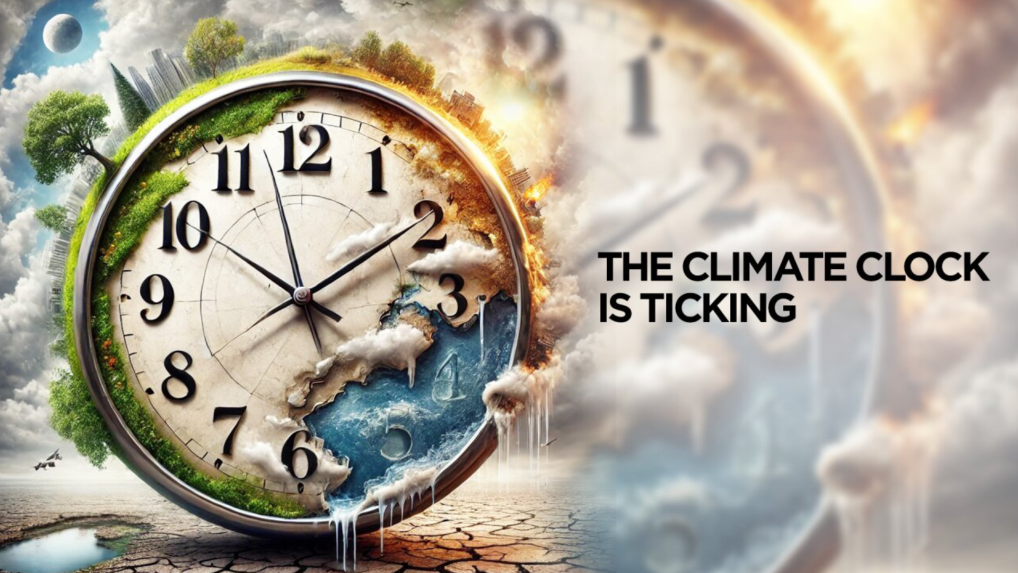
For decades, climate change existed as a distant warning—something discussed in conferences, documented in reports, and debated in policy circles. Today, it feels far less abstract. Rising temperatures, unpredictable weather, wildfires, floods, and prolonged droughts are no longer isolated incidents; rather a part of everyday reality. The climate clock is no longer a metaphor. It is a visible reminder that the window for meaningful action is narrowing.
According to the Intergovernmental Panel on Climate Change (IPCC), human activities have already warmed the planet by approximately 1.1°C above pre-industrial levels, and the world is increasingly likely to cross the critical 1.5°C threshold within the coming decades if emissions are not drastically reduced. It is stressed that every fraction of additional warming intensifies risks to ecosystems, economies, and human health. The challenge is no longer about predicting climate change; it is about responding to it with urgency.
Yet there are signs that the global conversation is finally shifting. Renewable energy adoption is accelerating, climate disclosures are influencing corporate decisions, and sustainability has moved from the margins of business strategy to the center of long-term planning. Consumers, investors, and younger generations are increasingly demanding accountability, pushing institutions to rethink how growth and environmental responsibility can coexist.
Still, awareness alone is not enough. The climate crisis is often slowed by political hesitation, short-term economic priorities, and the belief that meaningful change can wait. But climate systems do not operate on election cycles or quarterly profits. Delayed action today creates deeper consequences tomorrow.
In the Indian context, the urgency is especially visible. Heatwaves across northern and central India, erratic monsoons, and water stress in several states are already affecting livelihoods, agriculture, and public health. Further, India’s rapid expansion of solar energy and green mobility signals a growing recognition that economic development and climate responsibility must advance together.
The climate clock continues to tick. The question is no longer whether we hear it—it is whether we are finally prepared to act before the countdown reaches a point from which recovery becomes far more difficult.
SOURCES: