

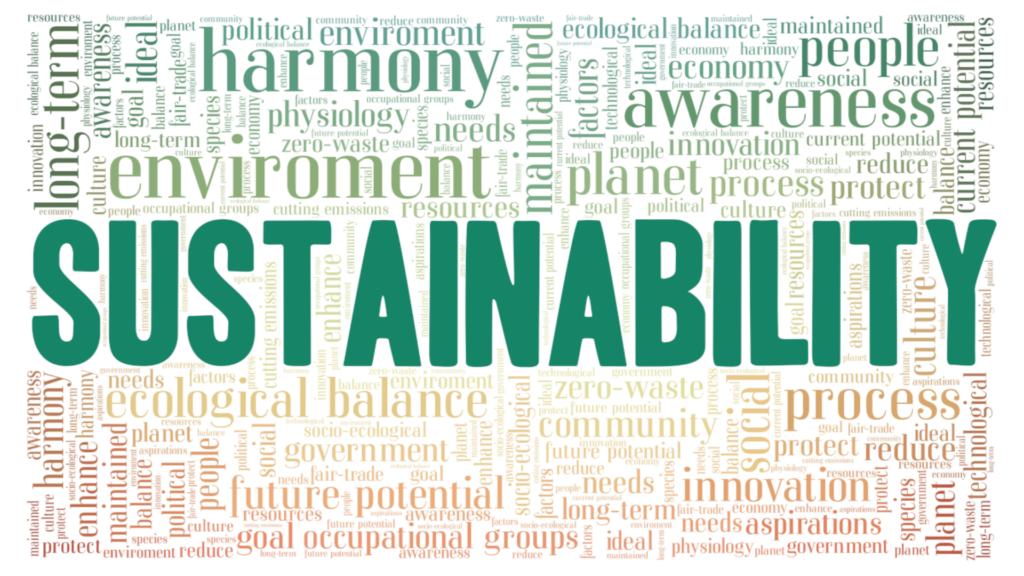
There was a time when the word “sustainability” felt precise—used sparingly in moments that demanded responsibility. Today, it appears everywhere: in brand campaigns, reports, and product labels. It signals intent, but not always impact. Like many popular terms, it risks becoming familiar without being understood. What once pointed to a clear purpose now often floats as a promise—present, but not always grounded.
This shift has created a quiet tension. On one hand, sustainability is more visible than ever. Frameworks led by the United Nations have embedded it into development agendas, while assessments from the IPCC stress urgency. On the other hand, real-world outcomes tell a different story—rising emissions and ecosystems under pressure. The language has scaled faster than the change it was meant to inspire.
To move beyond buzzwords, sustainability today demands a different lens. It is no longer defined by what organizations say, but by what they demonstrate. The shift—from ambition to accountability—is evident. Financial systems now integrate environmental and social metrics into decision-making, and businesses are evaluated not just on growth, but on how it is achieved. Yet, greenwashing reveals how easily intention is mistaken for action.
Seen this way, sustainability resembles a ledger—one that records not promises, but consequences. Every resource used, every emission released, and every community affected becomes part of a measurable balance. Technology supports this transition, enabling tracking and more efficient systems, but it does not define the outcome. The real change lies in aligning choices with long-term limits rather than short-term gains.
In India, this balance is particularly visible. National efforts such as the National Solar Mission and commitments under the Paris Agreement reflect progress, yet rapid urbanization and energy demand continue to test how growth and sustainability can coexist in practice.
Thus, sustainability today is not a parallel goal or a branding exercise. It is a way of operating—where responsibility is embedded into every decision and outcomes are continuously measured. Moving beyond buzzwords, it becomes less about what is said, and more about what is sustained over time.
SOURCES:
- https://medium.com/@Raman.M/what-sustainability-really-means-bf42112d06a2
- https://www.sustainabilitymenews.com/environmental-social/the-new-meaning-of-sustainability-beyond-buzzwords-toward-balance
- https://sdgs.un.org/gsdr/gsdr2023
- https://www.ipcc.ch/report/ar6/syr/downloads/report/IPCC_AR6_SYR_SPM.pdf